AMT Foreign Law Joint Enterprise builds an intelligent and agile project management foundation to promote firm-wide operational efficiency with Smartsheet implementation
The firm successfully established a centralized, firm-wide operational platform for project management in just four months.
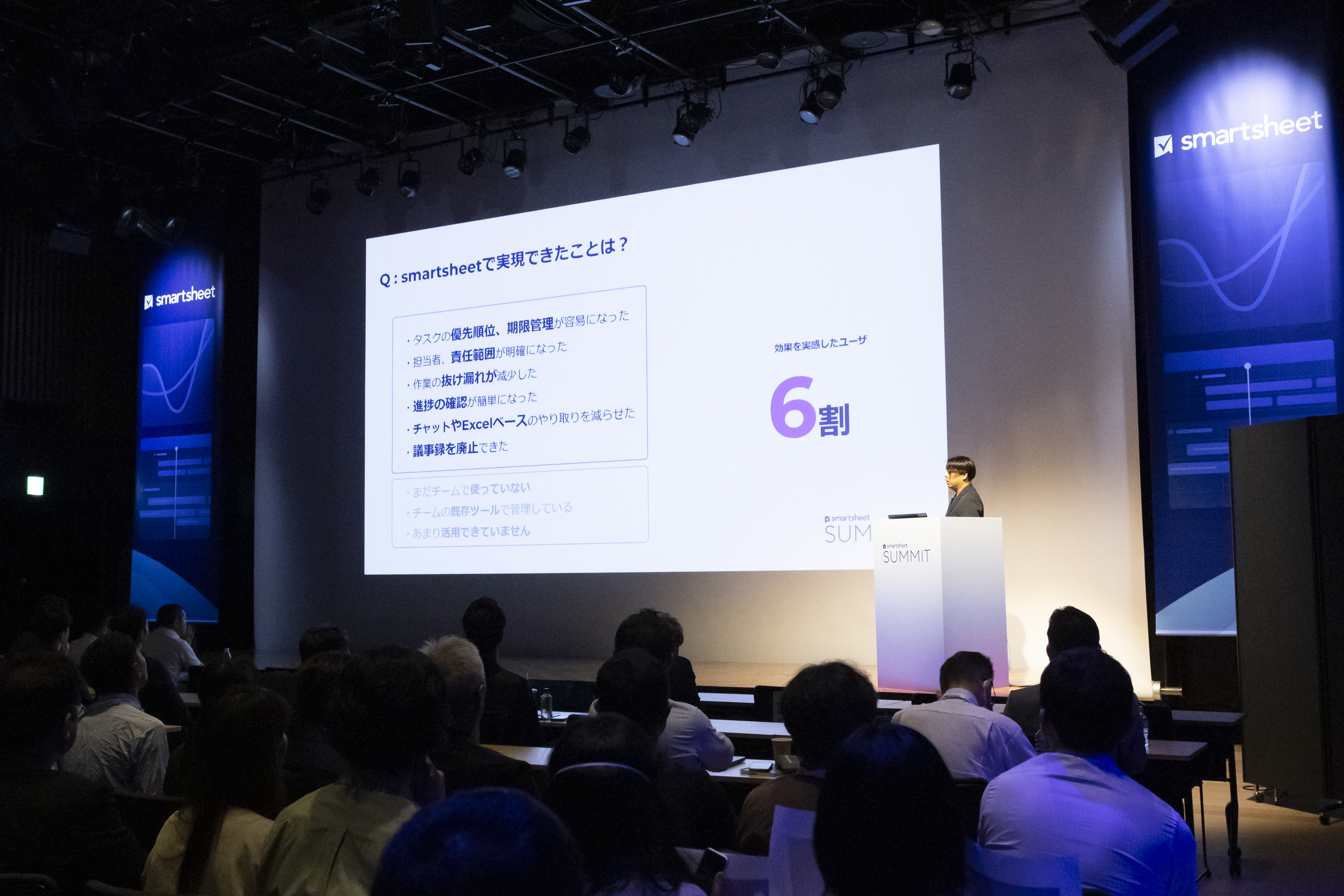
dashboard users reported experiencing positive effects
users felt tasks are now effectively shared within their teams
Industry
- Professional Services
Organization Size
- Mid-market (200-1999)
Region
- Asia Pacific (APJ)
Platform Capabilities


“In the Information Systems Service department where I work, we constantly manage over 10 concurrent projects. While driving these multiple initiatives, we frequently encountered issues like missed tasks and misaligned understanding among staff. This led to a pressing need for a tool that could standardize project and task management, moving beyond reliance on individual project managers' skills. It was during this search that we discovered Smartsheet, a business management platform, and decided to proceed with its implementation.”
Information System Services and Information Security Services
Anderson Mori & Tomotsune Foreign Law Joint Enterprise (hereafter AMT) is one of Japan’s leading law firms. With more than 700 highly specialized lawyers across 13 offices in Japan and abroad, the firm has successfully handled complex matters in cutting-edge fields and cross-border cases, consistently delivering the best outcomes through a practical and strategic approach. Supporting the firm’s operations at a fundamental level is the Information System Services Department, where Mr. Ryosuke Goto works. In November 2024, this department introduced Smartsheet to drive firm-wide operational efficiency. Mr. Goto explains the background:
“In the Information Systems Service department where I work, we constantly manage over 10 concurrent projects. While driving these multiple initiatives, we frequently encountered issues like missed tasks and misaligned understanding among staff. This led to a pressing need for a tool that could standardize project and task management, moving beyond reliance on individual project managers' skills. It was during this search that we discovered Smartsheet, a business management platform, and decided to proceed with its implementation.”

Creating an Environment Where People Want to Use It, Not Are Forced to Use It
Originally, AMT faced several challenges, including the lack of project templates, inadequate visualization and centralization of tasks, and difficulty managing resources due to unclear status. The information management method itself had become a bottleneck for operations.
“Information regarding project decisions, rules, and responsible personnel was scattered across various locations, such as chat logs, meeting minutes, and even individual notes on personal devices. This created misaligned understanding among members, missed tasks, and inefficient communication.”
In resolving these issues, the foremost priority for Mr. Goto was not merely the introduction of a solution. Rather, it was to ensure a change that would lead to the creation of a new organizational culture—specifically, the establishment of a shift toward a more intelligent way of working.
"In fact, this was my second time introducing a task management tool. Five years ago, I introduced a free, open-source tool once, but it failed to deliver the expected results and became a mere formality. For this latest implementation, I thoroughly analyzed the causes of that failure."
"Changing what people have done up until now presents a very high hurdle. To avoid repeating past failures in this implementation, I conducted a thorough analysis of the causes. I adopted an approach informed by a marketing perspective to encourage employees to spontaneously think, 'I want to use this,' instead of forcing them to use Smartsheet."
Mr. Goto reflected that he focused on "three keys" for successful adoption: the proper mindset for introduction, a strategy to generate empathy, and measures to accelerate adoption.
“The first crucial element is the ‘mindset’—understanding the position and values of the people involved. Knowing this allows both the promotion side and the user side to start the implementation smoothly and without stress. The response to new tool adoption varies among individuals. Furthermore, attempting to engage everyone equally from the start often creates significant resistance, so we adopted an approach of targeting those who were initially receptive and letting the adoption spread from there.”
Next implemented was the ‘empathetic communication method.’ “When we first began introducing Smartsheet, we had teams who told us they were managing tasks just fine with Excel. In reality, they must have had communication and man-hour issues, but they weren't recognizing them as problems. So, I pointed out the man-hours being spent on communication and reminders, and suggested, ‘The automation features of Smartsheet can make things much easier for you.’ It is extremely important to devise a way of communicating that leads to motivation—that makes the recipient want to use the tool.”
The practical solutions introduced include: standardization and automatic creation of project templates using Control Center’s blueprint feature, centralization of information and improved task visibility via dashboards and reports, and a mechanism using Resource Management to aggregate information and display it on dashboards to mitigate management burden. Mr. Goto also emphasized atmosphere and environment building as a “measure to accelerate adoption.”
“To expand utilization, we implemented measures like summarizing information in the chat tool they usually use, making it constantly accessible to lower the hurdle for access, setting up Q&A resources that anyone can access, and encouraging self-driven skill development through onboarding, follow-up, and effectiveness measurement. My biggest focus was training ‘Champions’ within each team and making them the transmitters of information. By having familiar colleagues share success stories, we aimed to promote the use of Smartsheet and spread it throughout the organization.”
Centralizing information on dashboards for unified management
The implementation of Smartsheet, directed by Mr. Goto, has already yielded remarkable results, despite having been in place for only four months since deployment. The percentage of users who felt that tasks were being effectively shared within their teams rose from 55% to 76%. Users actively utilizing dashboards exceeded 60%, and over 60% of users reported experiencing positive effects. Mr. Goto has seen significant benefits.

“I promoted the combined use of three core elements: Sheets, Reports, and Dashboards. This allowed information to be consolidated on dashboards, eliminating the need for meeting minutes for our regular team check-ins. We reached a point where everything necessary could be understood simply by reviewing the dashboard from top to bottom."
"The centralization of information on the dashboard means that task sharing within and between teams has become simple. Even for projects where information was previously scattered, clarifying responsibilities and deadlines has allowed us to significantly reduce misunderstandings among members and eliminate missed tasks.”
These changes facilitate various operational improvements, including not only enhanced business efficiency but also the realization of more agile project execution, guaranteed scalability through the centralization and visualization of information and resources, automation of business processes, further assurance of security, and the promotion of firm-wide, cross-departmental collaboration.
Finally, Mr. Goto strongly stated that AMT intends to further utilize Smartsheet, the Intelligent Work Management platform, to achieve the firm's vision.
“AMT has a vision of being ‘YOUR PARTNER FOR INNOVATIVE CHALLENGES.’ Through this Smartsheet implementation, we aim to further enhance the productivity of our lawyers, secretaries, and staff, and thereby support the achievement of this vision.”
Watch Mr. Goto's presentation from the Smartsheet Tokyo Summit to learn more!