

How Flight Centre Travel Group built one global language for work with Smartsheet
Flight Centre Travel Group unified two decades of regional autonomy into a single global PMO with Smartsheet, giving executives real-time visibility across 100+ projects worldwide.
Industry
- Live Entertainment, Travel and Hospitality
Organization Size
- Enterprise (10,000+)
Region
- Asia Pacific (APJ)
- Worldwide
Platform Capabilities


Two decades of regional autonomy left Flight Centre Travel Group without unified reporting or visibility, prompting a global PMO built on Smartsheet.
With standardised, company-wide dashboards, data shapes decisions, while the native Claude integration streamlines risk updates and audits.

"Smartsheet dashboards show symptoms, which then enables you to have those secondary conversations that actually make a difference.”
Global Head of Portfolio Delivery at Flight Centre Travel Group
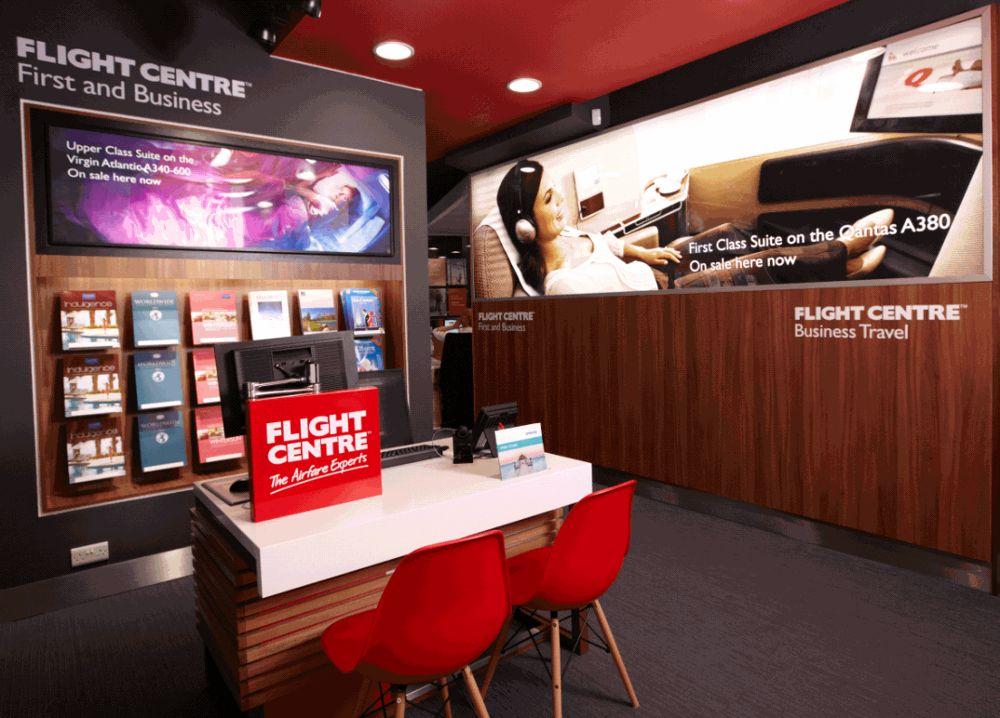
Flight Centre Travel Group (FCTG) began in 1973 with the purchase of a single double-decker bus, and has grown since into an Australian-born travel powerhouse spanning more than 2,000 leisure, corporate, and wholesale businesses across 11 countries. Its flagship Flight Centre brand alone runs 450+ stores and 3,500+ travel experts across five countries—Australia, New Zealand, South Africa, Canada, and the UK.
Autonomy’s hidden cost
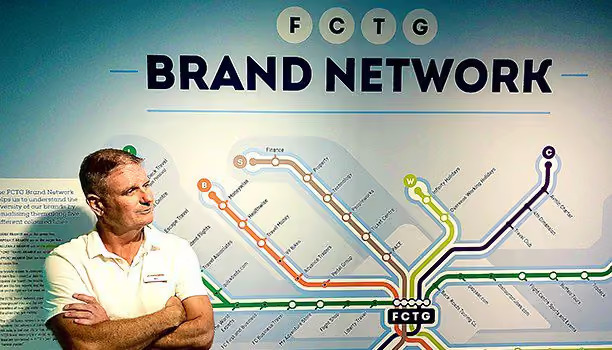
When Richard Galassi joined Flight Centre Travel Group as Global Head of Portfolio Delivery two and a half years ago, he inherited a business built on two decades of regional autonomy. Each market had built its own tech stack, run its own sales and marketing, and prioritised and managed projects its own way. This resulted in duplicative effort, competing priorities, and underfunded strategic programmes. Without cohesive global reporting, key stakeholders lacked the insight needed to make informed decisions, making it difficult to execute organisation-wide initiatives. “After the COVID-19 pandemic, we wanted to move to a truly global business, with global platforms and a standard operating model across businesses and brands,” shares Richard Galassi, Global Head of Portfolio Delivery at Flight Centre Travel Group.
Flight Centre Travel Group had been using Smartsheet since 2015, but adoption varied widely by region. When the company began building out its global Project Management Office (PMO), this familiarity made a difference. “For most of our regions, introducing Smartsheet wouldn’t have been a full change management exercise,” explains Galassi.
“Smartsheet also offered resource and capacity planning, which was a real blind spot in a lot of other tools. The native artificial intelligence (AI) integration, easy deployment, strong features.”
Scaling the common language
Flight Centre Travel Group set out to rally its regions around Smartsheet as its global Project and Portfolio Management (PPM) solution, a shared space where every market could work from the same structure, data, and priorities. Control Center gave the team a way to standardise project structures across every region while still leaving room for local flexibility. Dynamic View enabled stakeholders across markets to collaborate securely on shared project data. Resource Management gave the team the capacity planning visibility that had been missing, showing leaders where people and effort were going across the portfolio. Meanwhile, DataMesh and Data Shuttle connected data across regions and systems, replacing the disconnected, region-by-region reporting that had made global visibility so difficult.
Data shapes dialogue
Dashboards delivered the biggest benefit: executive-level, global visibility into programme performance. The Global Portfolio Dashboard, for instance, consolidates over 100 regional projects into a single source of truth, letting executives compare initiative progress across regions, spot misalignments, and reallocate resources accordingly.
For Galassi, visibility is only the starting point—the real value lies in the conversations it sparks.
“Smartsheet dashboards show symptoms, which then enables you to have those secondary conversations that actually make a difference,” he explains. “A Gantt chart or a risk register without the depth and practices behind it is just data. You need confidence that it's correct, and that it's driving intelligent decisions.”
Insight is only the start
Galassi makes sure this approach is embedded in the company culture. “We’re coaching our team to understand what good looks like, and having standardised dashboards, frameworks, and formats in Smartsheet make that possible,” he explains. “We’re encouraging business owners and managers to lean into this data to drive discussions and decisions. That's where we're going to start seeing better changes in behaviour and discipline, and ultimately, outcomes being delivered.”
The team has embraced this change.
“The internal interest in Smartsheet has been fascinating. Our employees have been using it in new and wonderful ways,” Galassi adds.
Much of that enthusiasm traces back to the native Claude integration. The integration enables project managers to update risk registers directly from email correspondence using AI, matching each project's tone and format, and flagging related risks that may need attention. Galassi's team uses it to audit projects in seconds, surfacing changes and inconsistencies that would otherwise take a longer manual review to find. “People are starting to realise how much they can do when they use Smartsheet as their project database,” Galassi adds. “AI can give you insights to shortcut your thinking, but you have to action those insights in the real world, which is why communication, resilience, and empathy will matter more than ever in our line of work.”
Alignment as an ongoing practice
Flight Centre Travel Group's next step is extending the same Smartsheet operating model to other divisions, including leisure and supply. The team is also exploring AI features for predictive planning, risk detection, and real-time insights, alongside automated strategic reporting at the executive level—so every part of the organisation works from the same picture. “We should never underestimate the value of a common language for work,” Galassi stresses. “Local autonomy is important, but without alignment to strategy, it’s like rowing in different directions. A unified operating model can unlock enterprise-wide value while preserving what makes each team great.”


